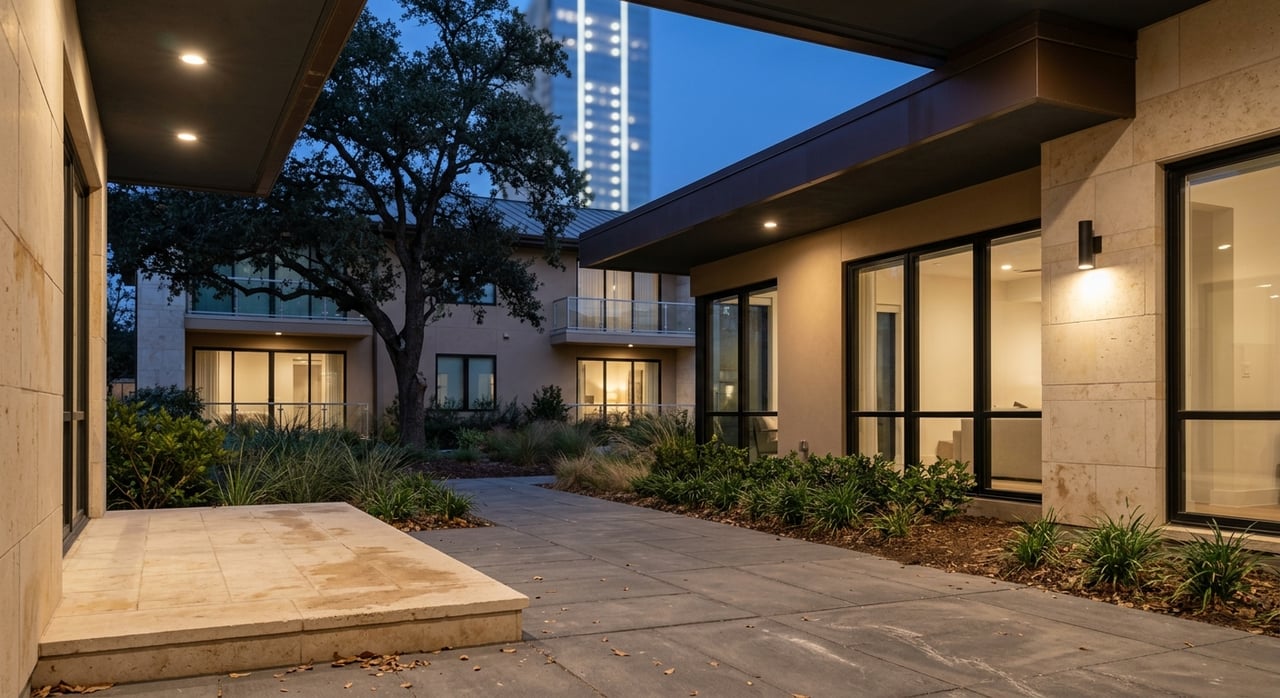
Wondering whether Austin condo living should feel like a skyline-forward city experience or a quieter home base with neighborhood character? If you are weighing downtown buzz against a calmer street feel, you are not alone. Austin offers both, and each option can support a genuinely urban lifestyle in a different way. This guide will help you compare the day-to-day feel, features, tradeoffs, and questions to ask so you can choose with confidence. Let’s dive in.
Austin condo living starts with lifestyle
In Austin, the condo decision is often less about whether you want to live in a condo and more about how you want to live in the city. The biggest contrast is usually between downtown towers and neighborhood-scale condo communities in areas closer to established residential blocks.
That difference matters because Austin’s downtown was intentionally planned as a dense, walkable, pedestrian-oriented core. At the same time, central and south Austin neighborhoods offer a more residential rhythm while still keeping you connected to shops, parks, trails, and local businesses.
The result is not a simple city-versus-suburb choice. It is more like choosing between two versions of urban living, each with its own pace, privacy level, and daily routine.
Downtown condos offer energy and convenience
If you picture condo living as floor-to-ceiling windows, skyline views, and stepping outside into an active streetscape, downtown Austin is likely what comes to mind. The city’s Downtown Austin Plan describes downtown as a livable, connected, multi-modal core with a strong pedestrian focus and a wide range of housing choices.
That planning vision shows up in real life. The Great Streets Program emphasizes broader sidewalks, shade trees, benches, bike racks, and sidewalk-oriented public space, all of which support a highly walkable lifestyle.
What downtown living often looks like
Current downtown condo listings show a wide range of sizes, from one-bedroom homes around 450 to 865 square feet to larger two- and three-bedroom residences around 1,360 to 2,324 square feet. Common features include open floorplans, balconies, high ceilings, large windows, stone finishes, and assigned garage parking.
For many buyers, the bigger draw is the amenity package. Downtown buildings may include 24-hour concierge service, pools, spas, lounges, fitness centers, yoga studios, business centers, conference rooms, bike storage, and pet-oriented spaces.
That setup can feel closer to a hospitality-style environment than a traditional detached home. If convenience and shared services matter to you, downtown towers can be a strong fit.
Why downtown feels different
Downtown Austin is shaped by active street life. Areas highlighted in city planning materials, including the Cesar Chavez Promenade and the Second Street District, reflect a public realm designed around walking, mixed-use activity, and sidewalk engagement.
That usually means your daily routine can include easy access to restaurants, nightlife, trails, and public spaces. It also means private yard space is typically not part of the value proposition.
If you want your home to plug you directly into the city, that trade may feel well worth it. If you need more separation from street activity, it may feel like too much stimulation.
Neighborhood condos bring a calmer rhythm
Not every Austin condo experience comes with a tower, valet-style amenities, or a fast-moving streetscape. Many neighborhood-scale condos are woven into older parts of Central and South Austin, where the setting feels more residential and the buildings are often smaller.
City planning documents for areas like Old West Austin, Bouldin Creek, and East Cesar Chavez describe long-established neighborhoods with mixed-use character, walkable streets, and strong local identity. These areas sit close to urban amenities while maintaining a distinct block-by-block feel.
What neighborhood condo living often includes
Neighborhood condo options in Austin may take the form of boutique buildings, infill flats, or townhome-style residences. In current 78704 listings, examples include two- and three-bedroom homes with open layouts, high ceilings, private balconies, two parking spaces, guest parking, dog parks, pools, EV charging, and in some cases small private yards or fenced outdoor areas.
That mix can appeal to buyers who want some condo convenience without giving up as much privacy. You may also find a stronger sense of separation between your home and the busiest parts of the city.
Why neighborhood settings feel quieter
Smaller buildings and more residential surroundings often create a calmer day-to-day experience. Instead of a downtown tower cluster, you may be living on established blocks near cafés, local retail, pocket parks, or trails.
That said, calmer does not always mean perfect. Older neighborhood plans also point to real-world issues like cut-through traffic, uneven sidewalks, and parking pressure in some areas. A thoughtful condo search should account for those details, not just the listing photos.
Price is only part of the equation
One common mistake buyers make is comparing condos only by price or price per square foot. In Austin, that can miss the bigger picture.
City housing research found that condos sold in 2017 and 2018 that were built in 2010 or later had a median listing or sale price of $388,000, compared with a $305,000 median for all condos in that sample. The same report notes that Austin’s condo inventory expanded into a newer, more expensive product that can compete with detached home pricing in higher-cost areas.
That means your comparison should include both the home itself and the lifestyle attached to it. A smaller downtown unit with extensive amenities may serve you better than a larger home with fewer shared features, or the reverse may be true.
Broader market context matters too. Unlock MLS reported that the Austin-Round Rock-San Marcos market entered spring 2026 with 5.5 months of inventory and a median home price of $415,300, giving buyers more room to compare location, building style, and monthly costs than during tighter market periods.
HOA dues change the real monthly picture
If you are shopping for a condo, HOA dues should be part of your decision from the start. They are usually paid directly to the association rather than through your mortgage servicer, and they can range from a few hundred dollars to more than $1,000 per month.
Those dues help fund common areas and shared services. In condo communities, that often includes structural and shared elements such as roofs, hallways, and building amenities.
So when you compare downtown and neighborhood condos, ask yourself a better question than “Which one is cheaper?” Ask, “What does the monthly payment actually buy me?”
A downtown tower may give you extensive services, staffing, and amenities, but less private outdoor space. A neighborhood condo may offer more privacy, more parking, or a small yard, but with a lighter amenity package.
Questions to ask before you choose
Austin condo living works best when you evaluate the details that shape daily life. A polished building or a beautiful unit matters, but so does the way you will move through your week.
Here are smart questions to ask as you compare options:
- How much of the home is usable living space?
- How much parking is included, and is it assigned?
- What is the noise level like inside the building and on the street?
- How close are groceries, trails, restaurants, and everyday errands?
- How much of the monthly cost is mortgage versus HOA dues?
- Do you want broad amenities or more private outdoor space?
- Does the surrounding area feel active, calm, or somewhere in between?
These questions can quickly clarify whether you are drawn to downtown for true convenience or just the idea of it. They can also help you see whether a neighborhood condo gives you the right balance of access and breathing room.
How to decide what fits you best
If your ideal day includes walking to dinner, using building amenities, enjoying skyline views, and staying close to Austin’s most active districts, downtown may be the right match. It is especially compelling if you value convenience, shared services, and a highly connected urban core.
If you want a more residential setting, smaller-scale buildings, and a little more privacy while staying close to the city, neighborhood-scale condo living may be the better fit. This route often appeals to buyers who want urban access without feeling fully immersed in downtown activity.
Neither choice is automatically better. The best condo is the one that supports your routine, comfort level, and long-term goals.
Austin gives you both paths. The key is knowing what kind of city life you want your front door to open into.
If you want help comparing condo options across downtown Austin and the city’s established neighborhoods, Kasey Fagan offers a calm, strategic approach with local insight tailored to how you want to live.
FAQs
What is the main difference between downtown and neighborhood condo living in Austin?
- Downtown condo living usually emphasizes walkability, amenity-rich towers, and immediate access to restaurants, nightlife, and trails, while neighborhood condo living often offers a calmer street feel, smaller buildings, and a stronger connection to established residential areas.
What amenities are common in downtown Austin condo buildings?
- Current downtown listings commonly show features such as concierge service, pools, spas, lounges, fitness centers, yoga studios, business centers, conference rooms, bike storage, and pet-oriented spaces.
What features are common in Austin neighborhood-scale condos?
- Neighborhood-scale condos in areas like 78704 often include open floorplans, high ceilings, private balconies, two parking spaces, guest parking, dog parks, pools, EV charging, and sometimes small private yards or fenced outdoor space.
Are newer condos in Austin more expensive than many buyers expect?
- Yes. City housing research found that condos sold in 2017 and 2018 and built in 2010 or later had a median listing or sale price of $388,000, compared with $305,000 for all condos in that sample.
How should Austin condo buyers think about HOA dues?
- HOA dues are part of the true monthly cost of condo ownership and are usually paid directly to the association. They often cover common areas, shared services, and some shared building components, so it is important to compare what those dues provide in each building.
Is downtown Austin condo living always more walkable than neighborhood condo living?
- Downtown is specifically planned around pedestrian-oriented urban living, but many neighborhood condo areas in Central and South Austin also offer walkable access to cafés, local retail, parks, and trails. The experience is usually different in pace and setting rather than simply walkable versus not walkable.