"Can I drill a well on this lot?"
It sounds like a formality, the kind of question a buyer's agent answers with a quick call to a driller and a signature on a form. In Dripping Springs right now, it isn't. The Hays Trinity Groundwater Conservation District, which governs groundwater across western Hays County including Dripping Springs, is currently in Emergency Drought Stage. Its own website states plainly that water wells are failing at an unprecedented rate and that no new permits for production or non-exempt well construction will be accepted until conditions improve. That is not a seasonal inconvenience. It is a closed door on new water rights for a category of buyer who assumed land plus money equals a house with running water on a predictable timeline.
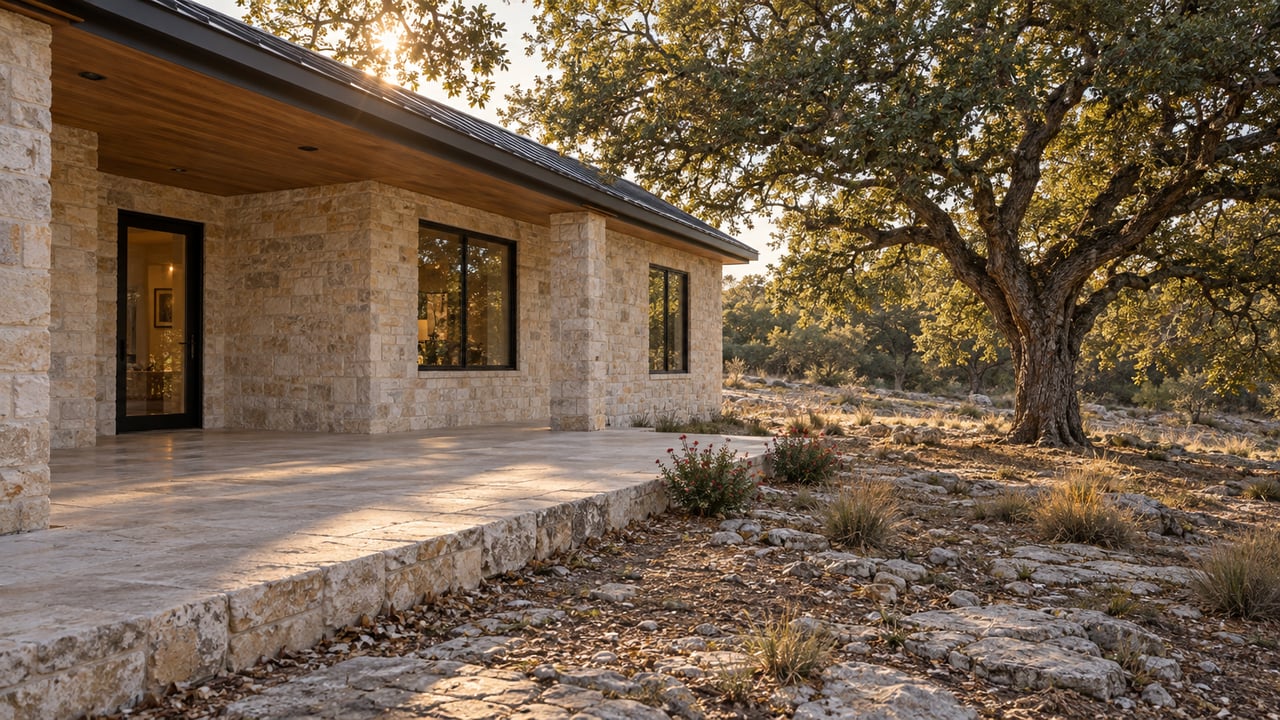
This matters because Dripping Springs sells itself on acreage. Master-planned communities like Headwaters, Caliterra, Highpointe, and Belterra get most of the attention, but a meaningful share of buyers still come here for the older promise: a few acres, mature oaks, distance from the next rooftop. That promise has always come with a private well and a septic system instead of a city water bill. What's changed is that the well half of that equation is currently gated by a regulatory agency, not by a buyer's budget or a driller's schedule.
What "Emergency Drought Stage" Actually Restricts
The district's rules are specific. Under Rule 13.3.3, the board temporarily prohibits the district from accepting new operating permit applications, permit amendment applications requesting more water, or new well construction notifications for non-exempt wells during Stage 3 (Critical) or Stage 4 (Emergency) drought conditions. When the district returns to Stage 1 or Stage 2, it will resume processing those applications. Right now, it hasn't returned.
The drought math behind that decision is public. The district's drought management page lists a 40 percent curtailment district-wide and a 30 percent curtailment specifically within the Jacob's Well Groundwater Management Zone, a 39-square-mile area where cutback triggers are tied to spring flow at Jacob's Well itself. When flow drops to 6 cubic feet per second or less over any 10-day period, the board declares the corresponding drought stage. This isn't a one-time emergency declaration from a single dry summer. The district has moved in and out of Critical and Emergency stages repeatedly since 2022, and the current posture is that conditions have not improved enough to reopen the permit desk.
If you're evaluating a bare acreage lot that depends on drilling a new well, that closed permit desk is now part of your due diligence, not an afterthought. A lot with an existing, already-permitted well is a different conversation entirely than a lot where the seller is counting on you to drill one after closing.
The Water Story and the Septic Story Are the Same Story
Dripping Springs sits on the Edwards Plateau, where the ground under most lots is six to eighteen inches of soil over solid limestone. That geology is why the water table struggles to recharge during drought, and it's the same reason septic systems here cost two to four times what they'd cost on flatter Texas ground. A conventional septic system elsewhere in the state might run $6,000 to $8,000. In Dripping Springs, where thin soil forces most properties into engineered alternative systems, installed costs typically run $15,000 to $30,000, and overall pricing here runs 15 to 25 percent above the state average once you factor in rocky terrain and long rural driveways.
That's not a random cost of living quirk. It's the same rock that's making new wells scarce that's also making septic systems expensive. Aerobic treatment units, paired with drip irrigation lines that distribute treated water through subsurface emitters, have become the standard fix because they work even where the ground won't allow a conventional drainfield. One local wastewater company has installed close to 30 aerobic systems for a single custom home builder in the area, which gives some sense of how routine this has become rather than how exceptional it is.
Dripping Springs itself has no municipal sewer system. Virtually every property, inside city limits or out, runs on some form of individual septic, though the city does administer its own septic permitting program inside city limits as a state-authorized agent, while Hays County handles permitting on unincorporated land outside those limits. Both authorities require a permit regardless of lot size. If you're building a casita, adding a bedroom, or getting a house ready to list, that permitting desk is where the timeline actually gets set, not the construction schedule.
Where This Shows Up on a Specific Lot
Picture two buyers looking at similarly priced properties in Dripping Springs this fall.
The first is touring a resale inside Headwaters or Caliterra, where the developer negotiated central water and sewer through a municipal utility district. Utilities are already run, the well question doesn't apply, and the transaction friction is a MUD tax rate stacked on top of standard property taxes rather than anything related to drought stage.
The second is touring three acres off a county road, no subdivision, an existing house with a well that's twenty years old. Here, the seller's well is grandfathered in and already permitted, so the drought freeze on new construction doesn't touch it. What it does mean is that if that well fails or the buyer later wants to drill a second well for irrigation or a guest house, that request goes into the same queue the district isn't currently processing.
The lot that should give a buyer pause is the third kind: raw acreage with no existing well, priced as if drilling one after closing is routine. Right now, it isn't. It's contingent on a state groundwater agency reversing an emergency declaration, and nobody can put a date on that.
What the New Wastewater Money Does and Doesn't Change
The Texas Water Development Board approved roughly $51.5 million in financial assistance for wastewater system improvements in Dripping Springs, covering planning, design, construction, lift stations, force mains, treatment systems, and an effluent holding pond for reuse. It's a real investment, and it addresses a genuine constraint. For years, limited wastewater capacity has acted like a brake on what the city could permit for new development.
It is not, however, a sewer line arriving at your septic property next year. Sewer availability remains property specific. A home or a parcel of acreage may continue running on septic for years, depending on its location, existing agreements, and how the city sequences future connections. The plan also emphasizes reuse: treated effluent is intended for irrigation at parks, athletic fields, and open spaces rather than broad residential discharge, which tells you the expansion is aimed at unlocking commercial and higher-density growth more than it is aimed at converting existing acreage homes off septic.
If you're buying land with an eye toward future subdivision or a denser build-out, this expansion is worth tracking. If you're buying a single acreage home for yourself, the practical reality doesn't change: you're still buying a well and a septic system, and you should evaluate them as such.
Reading the Water Utility Before You Read the House
A few questions are worth asking before you write an offer on anything in Dripping Springs that isn't already on a municipal utility district's water and sewer system.
Ask whether the lot's water comes from the Dripping Springs Water Supply Corporation, the West Travis County Public Utility Agency, a different water supply corporation, or a private well, because each has its own restriction schedule. The Dripping Springs Water Supply Corporation has been under Stage 4 watering restrictions since May 23, 2025, citing continued declines in aquifer levels and limited recharge west of town. Under Stage 4, hand-held hose irrigation with a shut-off nozzle is allowed on a scheduled basis, but drip irrigation and automatic sprinklers are prohibited, and dedicated irrigation meters get shut off by DSWSC staff.
Ask for the well log if the property has an existing well, along with a current flow-rate and water-quality test, and find out how old the pump is. Ask whether the septic system is conventional or aerobic, when it was last inspected, and whether the required maintenance contract is current, since aerobic systems need a licensed inspection roughly every four months under state rules. Ask whether the parcel sits inside Dripping Springs city limits or in the extraterritorial jurisdiction, since that line determines who handles wastewater permitting and whether city property taxes apply at all. And if the lot has no well yet, ask directly whether it would need a new well construction notification, then check the district's current drought stage before assuming that notification would be processed on any normal timeline.
None of this is meant to talk anyone out of buying acreage here. People move to Dripping Springs for the space and the quiet, and plenty of them keep their well and septic setup for decades without incident. The point is that the tradeoff is specific enough, and current enough, that it deserves the same scrutiny as the price per square foot.
A Few Questions That Come Up Often
Does the current drought stage mean I can never get a new well permitted? No. The district has moved between drought stages multiple times since 2022, and it resumes processing new well applications once conditions return to Stage 1 or Stage 2. The freeze applies while the district remains in Critical or Emergency stage, which is where it currently sits.
If my lot already has a well, does any of this affect me? An existing, already-permitted well isn't subject to the freeze on new construction notifications. It's worth confirming the well's permit status and production history regardless, since a well that's aging or under a shared aggregate permit with a subdivision system can carry its own set of questions.
Will the $51.5 million wastewater expansion eventually reach my septic property? Possibly, but not on a fixed timeline. The city's own framing treats sewer availability as property specific, and the initial phase leans toward reuse for irrigation rather than broad residential hookups.
Buying land in the Hill Country has always meant trading a city water bill for a different set of responsibilities. Right now in Dripping Springs, one of those responsibilities is checking a groundwater district's drought stage before you check the listing price.
If you're weighing acreage against a master-planned lot in Dripping Springs, or you just want someone to walk the well and septic questions with you before you write an offer, Kasey Fagan is a call away.